Fileon4 Investigates; Forced adoption is it happening today? – Tues 6 Oct BBC Radio 4
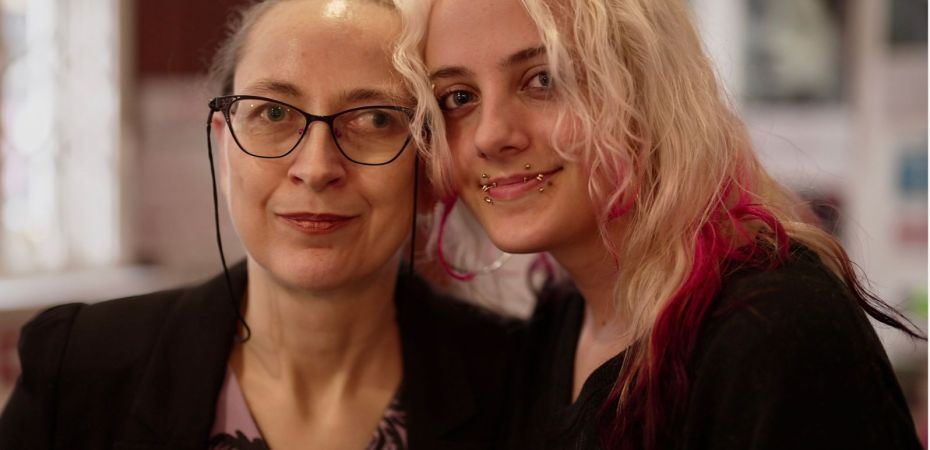
Jean, a birth mum who fought to keep her child for two years, and Tye, her daughter who was forcibly adopted are part of Support Not Separation and the Disabled Mothers’ Rights Campaign. Their stories are part of our forthcoming Dossier, After the Apology: the movement to stop today’s forced adoptions to be published during National Adoption Week (19-25 October). It includes testimonies from nine birth mothers, two grandmothers and two adult adoptees.
Following an earlier Fileon4 investigation, Adoption: the blame game (December 2025), we wrote to them pointing out that forced adoptions were not just “historic” and “to draw attention to the issues that lead to children being adopted in the first place . . .”. We invited them to get in touch. Their Investigation is a result of the work we have done with the BBC over the past six months, putting them in touch with birth mothers whose children were forcibly adopted and with adoptees. The programme includes compelling interviews with those directly affected, as well as ourselves. See here for an interview they gave when they were first reunited.
Jean, birth mum
Jean has a genetic disability (Ehlers Danlos Syndrome) and other health issues which leave her feeling exhausted, in pain and needing at least crutches to walk. She also had mental health issues following childhood trauma and estrangement from her family when she was in foster care for a short while.
She had been told as a teenager that because of her gynaecological problem she would never be able to have children. Yet when she was 22 she found herself four months pregnant, by which time the relationship had ended. She agreed to a referral to social services as she knew from her health issues that she would need help once her baby was born.
The abortion papers were put on the table in front of me at every psychiatric appointment, at every social services appointment, signed, ready for me to sign to go and have an abortion at any point up until the point that I went into labour. They were adamant that they did not want me to have this child and I was adamant that I did not believe in abortion and I was having this baby one way or the other.
Social services had wanted to take the baby as soon as she was born, but Jean stayed in hospital for 7 days and the nurses showed her how to care for the baby and could see that she was coping well, so held out against social services pressing for foster care, and she went back to her mother’s house with the baby. When her daughter was 12 weeks old, her mother and step-father falsely accused her of punching the baby, social services then took her and never gave her back, despite the baby not being harmed in any way.
I had two mother and baby residential assessments. And I failed. They used my mental health against me. They said that there was nothing physically wrong with me. It was all mental health. I was just lazy. I couldn’t be bothered. They said that it would be in the child’s best interest for her to be adopted because if she was left with me, she would grow up having to be my carer rather than being my daughter. And that because of some of the issues that I went through as a child, she would grow up having an unnatural association with men and she would never be able to have a normal life and normal relationships.
Jean fought for two and a half years to stop her daughter being adopted, and during that time she had regular contact in a contact centre – the staff there knew her better than anyone else and could see that with some support, she could have cared for her daughter.
Because they weren’t willing to give the reports that social services wanted them to give, none of [the staff] were allowed to appear in court and give verbal testimony. It was only their written reports that were worked on. And so their written reports would say things like “baby cried”. But they didn’t explain exactly why the baby was crying. And so it was like, oh, well, the baby cried because they were with the mother. It must be the mother’s fault. It’s not like the baby was crying because the session was coming to an end and she was being handed back over to the foster carer, or the baby was crying at the start of the session because she was being handed over to her mother . . .
The baby cries. Is she crying because she’s hungry? Is she crying because she’s tired? Is she crying because she’s frustrated? Is she crying because I’m holding her and she wants to get down and crawl around? Is she crying because she doesn’t want to go back to the foster care? She wants to stay with me? It doesn’t say, it just said “baby cried”. And so social services said, well, look, baby cried when she was with the mother. That proves that she didn’t want to be with the mother. How many times did she cry when she was with the foster carer? Why didn’t they say that she didn’t want to be with the foster carer?
So she was adopted [in 2005] and one of the reasons that the adoption was finalised, the judge said, was that the social services had forced their hand because they’d already placed her with the adoptive family even before an adoption order had been granted, even before a freeing order had been granted, never mind an adoption order.
Two years after the adoption Jean was officially diagnosed with EDS and had to use a wheelchair. She decided to formally complain to social services about the way they had continually ignored or disputed her physical health issues, claiming that she was making them up. Eventually in 2010 they agreed that if she had been properly assessed as a mother with physical disabilities, she may have been able to keep her daughter.
Jean applied for face-to-face post-adoption contact during the adoption hearing but it was refused. She only had letterbox contact twice a year from the time her daughter was adopted. At first she was able to send presents for birthdays and Christmas, but when her daughter was 10 the adoptive parents said she could only send gift cards, not presents. When Jean’s daughter was approaching her 18th birthday Jean asked the letterbox co-ordinator what would happen once her daughter reached 18 and was told that a letter would be written to Tye asking her if she wanted the letterbox contact to continue and if she did, it would last until 21; if not Jean was told she could ask again when her daughter reached 25. The adoptive parents told the social worker that Tye did not want contact with Jean, so she made sure that all her contact information was on the adoption register, and she maintained a profile on social media, hoping that Tye could contact her that way. Six months after Tye turned 18, her partner reached out to Jean on social media, and they subsequently started messaging and speaking to each other. Six months later they met in person for the first time in 16 years.
A key issue for Tye has been that although Jean told social services about her disabilities and provided ongoing medical information for them to inform the adoptive parents, Tye was never told about her medical history. So when she was growing up and felt unwell, she was always accused of making it up. Jean was explicitly told that the letters she wrote to Tye via letterbox contact, MUST NOT mention her diagnosis or the extent of her ill health. Consequently, Tye’s health has been deeply compromised because she did not get any treatment until after she met her mother and found out what her health issues are.
It’s like living in perpetual grief. Your child is gone. You don’t have a grave you can visit. You’re not treated in the same way as somebody whose child has died. As soon as anybody hears that your child has been adopted, you’re viewed as if you’re a pariah. You know, you must have done something wrong. You either abandoned your child or you did something wrong and so they were taken from you. People assume that social services would not have taken your child from you if you hadn’t harmed them or you hadn’t abandoned them.
You cannot use adoption as a cost-cutting exercise. You cannot break up a family just because it’s cheaper than keeping them together.
I think that as soon as they heard, the very first time when I said to the midwife, yes, please, I want a social worker, as soon as they heard that I had disabilities, whether it was physical or mental health, they decided that I would cost too much money and that she was going to be adopted and that nothing I ever did would make them change their minds.
I fought every step of the way to keep her. So if anybody tries to claim that forced adoption doesn’t happen today, it’s wrong. They’ve just changed the name and made it a legal process rather than the coercive process that was happening in the 50s, 60s and 70s.
Tye, adoptee
“I was two when I was adopted but I’d been in foster care before that. I don’t remember much of it. I have very little memory of my life all the way up to turning 18. I barely remember anything. But there are bits and pieces, you know, and there are clues in the letters and in grade reports and things like that from school.
It’s hard to say exactly what went on because I don’t really have the most confirmation, but there are certain context clues that let me know that I was being sexually abused there. Most of what I remember was verbal abuse. You couldn’t say no to them, you couldn’t do anything they disliked. Otherwise they’d be stamping around the house and slamming cupboards and calling you horrible for a week.
What really got me was the racism because I’m mixed race, I’m Latina, I’m Brazilian on my dad’s side and I’m Eastern European and British on my mum’s side and as I’ve recently found out I also have a lot of Middle Eastern heritage, a lot of African heritage that I wasn’t previously aware of. I’ve had to get a lot of therapy books, a lot of books on racism, just to fully understand the sheer scope of what happened to me. A lot of the racism, it’s not just that I wasn’t prepared for it growing up because they didn’t care, [it’s that] they didn’t view it as something I’d ever have to face. But a lot of it came from them as well. The most obvious example I can think of is the guinea pigs: we’d have two guinea pigs at a time, those were the family pets, aAnd because I’m Brazilian, one of the jokes in the household was that I was going to eat them when people weren’t with them. There was discrimination that I faced at school, out and about, even just walking on the streets. I can’t really go to the shops without a store attendant following me thinking I’m going to steal something, just because of how I look. And I didn’t even know that until my fiancé, who is white, pointed that out to me. I hadn’t been prepared for that. And it is such a harrowing experience, you know, not realising how much danger you’re in because of this, because I’ve had people follow me on the street because I’m mixed race. I’ve had people roll down their car window and scream slurs at me. And I’ve had people at school flick things into my hair to see if I’ve noticed – anything ranging from glue to little wads of paper balls to chewing gum into my hair.
The adopters never told me that this would happen to me, they didn’t prepare me for any of this and given how much danger these racial prejudices can put a person in, being so oblivious could have made me vulnerable to some really bad harm. It’s such a weird feeling opening these books and reading about all of these horrible experiences and these racist treatments and having to just sit there and go, oh, but that happens to me too. It feels weird, it feels uncomfortable and seeing how much of it came from that family. I should have been taken out of there. I really should have. I don’t know if social services knew what was going on, but I do think that all it would have taken was just one look at the letters [they wrote to my mum] to know that they did not give a shit. They didn’t care.
Me and my fiancé, the day before the first interview, we were actually reading through the letters together and we were laughing and laughing. We could not stop laughing because for like three years in a row, all [the adoptive mother] talked about was how much I liked lasagna — there was nothing of substance in there. They left out all of the times I was going to the hospital. Any achievements that I had were attributed to their own success. They treated my mum like she was an inconvenience, as if she was some nasty thing reminding them that I wasn’t really their child. They spoke about her to me like she was the bogeyman, as if she was some big monster that was going to come and take me away someday. I would be sitting in bed, this tiny little kid thinking, well, I hope she does, you guys are terrible.
They didn’t have any of their own children. When I was five, they did adopt a boy who was two. We did not get along but you know in a family like that you have to pretend otherwise they’ll come for you. They treated him significantly better than the way they treated me. I don’t know if that’s because he was white or if it was just because he was a boy or if it was both, I don’t know. But the world revolved around him. The adoptive parents were white British. They made no attempt to acknowledge my ethnicity at all. The only time me being Brazilian was ever brought up was if it was in reference to me being exotic or sexy, which I don’t think is something you should ever refer to your own child as. Especially if it’s based solely on their ethnicities. It was really uncomfortable.
The father was Church of England, the mother was more aligned with Catholicism, I think that might just be just because of the area and what was available at the time. There was a lot of pressure to be religious, even though I didn’t want to be. And that had its own set of issues that I had very little freedom. Coming up to 16 was especially difficult because as hard as it is to say, I hadn’t planned to live that long. I had made several suicide attempts up until that point. I truly did not believe I would live long enough to see 16. Nobody noticed, they didn’t notice but there were near-death experiences as well that weren’t related to suicide attempts. Nobody did anything about those either. So 16 was really hard because I had honestly hoped I’d be dead by then and I know it’s terrible to say but I was so angry that I was still alive. It felt like I was being cheated. They found me climbing in my room one day just covered in scars and instead of getting me a therapist or any kind of reasonable help like a normal parent would, they took my phone. They wouldn’t let me go out. They got me a pet snake because I’d mentioned wanting one recently. And they got me school counselling and CAMHs but I couldn’t take any of the phone calls and get any real help because they used to listen in on my phone calls. So nothing changed. They just tried to sweep it under the rug.
I couldn’t go outside unsupervised. I couldn’t go meet up with my friends unless it was planned a week in advance, and even then if I did get to go out she’d be huffing and stomping. I don’t know if you’ve ever been in a household like this. When they start like doing chores at you angrily, I’m not sure how to explain it, but the way that they walk changes, the way that they move changes, they do everything in their power to let you know that they’re angry at you, to let you know that you’ve done something wrong, that it’s your fault. And the air gets hard to breathe because everything is just so hostile. They’ll never outright tell you that you shouldn’t have done that. They’ll never outright say that because they know that that’s a mean thing to do. They know it’s not right to tell someone, hey, you’re not allowed to go out. I don’t like it when you go out. I don’t like that you have a life. I don’t like it when you go see your friends and I don’t know what you’re doing. I can’t watch you and be sure that you’re doing everything the way I do it. Because they know that that’s wrong. It doesn’t stop them from making it your problem. If you go out with friends somewhere they can’t see you, even if it’s someone you’ve known all your life, you get home and they’re angrily washing dishes in front of you. It’s a horrible environment to live in, it’s really horrible. It’s like having to be a parent to your own parents. It’s like living with giant toddlers. I couldn’t even leave a room without them physically blocking. I couldn’t go to my own bedroom without their permission. I’ve tried to think of what reasons they might have, what justifications they might have had, but there’s nothing that can justify treating a child like that.
I’m not going to say that my brother got off easy. He had his own problems, they were mean to him too, but nowhere near as bad as it was with me. He’d get in trouble when he was doing things wrong or if he did something that they didn’t like. I got in trouble just for existing in the house. If I didn’t have a happy face on, if I breathed a bit funny, I used to get yelled at for coughing. If I was choking on my food, they’d tell me that I needed to be quiet because I was ruining the TV show they had on. It’s up.
I felt more like a pet than a person. I was something to show off, I was proof of how good they were.
The letters that I’d get from my mum and from my grandparents, were always under really strict supervision. I didn’t get any privacy to read them. They gave me the illusion of choosing what went into the replies but as my mum’s already said it’s not like I got much say, they’d just copy and paste the same letter and then they’d look at me and go, is this OK to send, and I’d say yes because I knew if I didn’t I’d be facing a lot of trouble for the next couple weeks. They were mean people.
I went to hospital quite a lot growing up. Usually, I’d put myself there just so that I wouldn’t have to deal with people at school or at home. It felt like being at the hospital was the only safe place where I wasn’t being watched or having things thrown at me or being yelled at. The food was a lot better at the hospital too, which is saying something because hospital food is horrible. They all thought there was nothing wrong and I just thought there was something wrong with me. I thought I was just weak. I thought I wasn’t trying. I thought I was being lazy and I needed to work harder. I had no idea I was disabled. The funny thing is they took in my younger brother for an evaluation and he got diagnosed with hypermobility but they didn’t do that for me, so he got physio growing up and he got all of the help that would stop it from getting worse or progressing as much. I didn’t get any of it.
It’s only now that I know what was making my conditions worse and finding out more about my family’s health history. I have a diagnosis now for Ehlers Danlos Syndrome (EDS) which is a hereditary genetic degenerative disorder which my mother has. I know what to get referred for. I’ve had help with antidepressants. I luckily don’t need to take those anymore. I’ve had a lot to catch up on and a lot to do by myself but I will say it’s definitely a lot easier now that I’m out to get all that sorted.
I managed to get out for the first time at 16, I made a run for it. I’d been planning to do it since I was at least seven. I just hadn’t had the opportunity before but when I was 16 I finally did it. I made a run for it. And a couple weeks later the police caught up with me. I told them, this family has been abusing me, I’m not going back, I would rather be homeless, I would rather be back in the care system. If you take me back to that place, I will just kill myself. I would rather be dead than be there. There were so many things wrong with that home, and no one cared. They could not care less. I told them point blank, I would rather be dead than live with these people, but they did not care and forced me to go back.
And I think it’s so interesting, especially in the last interview with my mum where she said that they were looking for any excuse whatsoever to take me away from her, even though I was a perfectly healthy baby and nothing was wrong.
I knew that my mum lived in London and whenever we went to London, I’d be looking out for anyone that looked like her in the crowd. I thought maybe if I ran into her maybe she’d take me back even if she didn’t want to. I wanted to make a run for it, I really did, but in an environment that controlling you really think the next best option was just to die because that felt like the only way to get out. I just wanted my mum.
They did say that I was in care because my mum couldn’t look after me because she wasn’t fit to take care of me. They didn’t go too crazy with the exaggeration on that one but given that she did win the court case proving that she was fully capable of taking care of me, I still think that was a bit unfair especially when they themselves definitely were not fit to be raising children.
I wasn’t able to do anything [about finding my mum] until I turned 18, just because that was the one time when they weren’t watching me, when they couldn’t get to me. That was the one time I had the freedom to actually look. My fiancé found her on Facebook. I wasn’t allowed social media in that house, all the way up to 18 I just I wasn’t allowed it. I managed to leave about six months after I turned 18. I stayed with my fiancé until I was able to get into temporary accommodation, so I was homeless for about three weeks. Best weeks of my life. It was scary, but I do think it was the right thing for me. I think if I hadn’t, I’d be dead. They did try to find me and I actually had to call the police because they wouldn’t give me my legal documents, they wouldn’t give me any of my things. And when the police did show up at the house to tell them that I needed my documents, I needed my passport, my birth certificate, all of that, they had conveniently left the house. So the cops had to call them to come back to the house and give me the documents. The father tried to act all buddy, buddy, like nothing was wrong, trying to be really friendly. I wasn’t having it. The cops weren’t having it. You know, they’re good at putting on an act, but it can only last so long.
The fact that I was 18 was what did it, because legally they couldn’t make me go back, they couldn’t force me. There was nothing they could do. So it was a lot more on my side at that point.
I was staying with my fiancé at his parents’ house. He was the one who looked for [my mother for] me. I don’t think I would have been able to find her without him. But he managed to find her on Facebook and started messaging her just in case it went wrong, just in case she didn’t want to connect with me. He acted as a bit of a barrier for me just in case things weren’t safe. We had to do some confirmations and back and forth to make sure that it was definitely me, and it was definitely her, that it wasn’t a mean prank or some kind of scam.
When I found my mum, I was angry. I was really angry that it had been so easy. You know, 18 years of being the unwanted, of being unloved, of not knowing what to do or where to go and then it turns out my mum has wanted me this whole time and absolutely would have taken me back and all I had to do was write her name on Facebook. When we started talking, we were careful about it — she’s my mom and I’m her baby but we didn’t really know each other. A lot of it was trying to figure out what in the letters was real and what wasn’t real. I was really scared I was going to disappoint her because I wasn’t anything like they had said in the letters. I was nothing like that. I had a different name. I had, changed how I look. My mum was a lot better than I could have ever hoped. She was everything. It was like I was looking at everything I had ever admired, everything I wanted to be. And she’s my mom. All of the things that I believe in, all of the things that I stand for, she has the same kind of values. She has the same kind of ethics, and it was really nice just being able to look at a parent for once and think they get it instead of thinking “oh, I’m going to have to hide everything about myself so that they don’t hate me”. That was the first time I felt like I had a parent who actually would accept me for who I was and not some version that I had to make up to keep them happy. I don’t remember how long it took exactly but we went to the London Aquarium, me and my mum and my partner, we had photos from it, it was a really good day, it was really nice.
I was 18 or 19 when that happened and I’m 23 now. It’s been going really well. I live a bit further away from her than I’d like to, so I don’t get to see her often, but we message on WhatsApp and it’s nice, it’s nice to finally have a mother. I just keep thinking that this is the parent I needed growing up. It’s really hard to stomach that they would take me away from someone who is so loving and accepting and to me she’s perfect, and decide that she’s not good enough and place me with these horrible people who absolutely hate me, and think, oh, well, job well done. I would have had a better life with her than I did with my adoptive parents. I really would have. People could make all the arguments they want, like, oh, you would have been a young carer, you would have been this . . . I don’t care. I like looking after people. I’m happy to look after my mum. I don’t care if I was a young carer. I’d be happy with it. I’m a carer now. I look after my partner. So it really doesn’t matter to me. I just needed to be loved and she would have loved me. I absolutely would have had a better quality of life if I had grown up with her than if I had been adopted. I believe that with my whole heart.
It made me angry, but it was a huge relief at the same time because all of those what ifs, all of those what if she doesn’t want me? What if she’s over it? What if she didn’t want to hear from me again? What if she did want me, she did want to hear from me, she did want me in her life. And it was infuriating to know that we had both been cheated out of our family life, but it was at least nice to know that she did want me.
I’d say [to the government, to professionals] if you care so much about protecting children, you should work to make sure that the households they grow up in are safe. You should do more regarding interracial and transracial adoptions to make sure that children who aren’t white, who are Black, who are brown, who come from different ethnic and cultural backgrounds to the adoptive family, you need to be screening those adoptive families for any racial biases, for any preconceived biases, for racism, for their beliefs. You need to be checking in to make sure that that child is growing up around their cultures, around people like them. And honestly, you should be doing a lot more to make sure that any parents who are struggling with their children are getting the support they need to look after them before just taking the child away.
I really think that the way adoption works needs to be completely re-evaluated because a lot of parents who adopt a child, they don’t want an adopted child, they want their own child. And when that’s not an option, adopt your kids is the plan B. And I don’t think any child should ever be seen as a backup plan. I think there needs to be more accessibility for counselling and for therapy put in place for people who can’t have their own children. I think there needs to be more support put in place for people who want to adopt so that we don’t end up with people taking on foster children and treating them terribly for payment. I think that there needs to be a lot more support given to struggling parents so that children don’t have to be taken from them. I think there needs to be more accessibility and less stigma around abortion so that children aren’t born into homes where they won’t be taken care of, where they won’t be looked after, that’s the most humane option available to the parents. I think that more support for domestic violence needs to be added so that people aren’t forced to have children and get stuck with a horrible partner who they can’t leave because they have a child to look after. I think that all of these claim that it’s what’s right for the child, it’s what’s right for the family, I think it’s a lie. I think if they really cared about the children and parents, they’d be doing more to make sure that those children have a good quality of life to begin with, so that it doesn’t get to the point where they have to be taken.
I think the adoption system as a whole needs massive reform, because children are not products to be sold to people who think they deserve a child just because they couldn’t have one. Adopted children are not a second option. If you want to adopt a child, it should be because you want to adopt a child, not because you couldn’t have your own.
I’m 23, I live under a housing association in a studio flat, no bedroom, just one room, a kitchen, and a bathroom with a concrete, floor and draughty windows. That’s where they put you when you’re homeless. I couldn’t afford to pay for floor covering. I’m disabled, I’m incapable of work, I’m on benefits, so escaping that house, escaping that family came at a cost and the cost was poverty. But I’d still take that any day over living with them. This is the happiest I’ve ever been. I would choose this place a million times over than living back there. This is the most free I’ve ever been. I would not give it up for anything. As someone who was adopted, I don’t even qualify for whatever support is supposed to be given to care leavers. There were limited resources available to me and you know they’ll tell you there are people who can help you, you know there are organisations. They don’t tell you that a lot of the time those organisations will do everything in their power to avoid you, or to ignore you.
I was with MIND charity for a while and they were brilliant at first, but it really does depend on the person who you’re working with. After the guy who I was working with had to relocate, the person who came after did not care. All of a sudden, the help I was being offered just wasn’t there anymore. Everything that I’ve managed to achieve thus far, I’ve had to do without the benefits of being seen as a care leaver. I’m not considered one because I was adopted, especially because I left for good when I was 18. I do think if I managed to stay out instead of being forced back when I was 16 that things might have been different. I think I would have got more support then but with the way that they treat care leavers I’m honestly not sure I would’ve.
The cost of leaving was poverty and I’m paying that cost. I don’t really have the finances to be able to go out and do things, maybe once every now and then if money happens to be particularly good me and my fiancé will go out to town and we’ll have dinner out or lunch, we might get a bubble tea or maybe a soap bar from Lush.
I like designing characters and making up little stories and little worlds around them and things that help me better understand what happened to me, what things were like for me. I like to post them sometimes and I like to think maybe they will help someone else going through similar things to what I went through.”

